Check Dictionary
Works for any single word, 1–15 letters, no spaces.
Check Dictionary: Verify Any Word Is Real in Seconds
“Wait, is that actually a word?” comes up more often than you’d expect, mid Scrabble game, halfway through writing an email, arguing with a friend over text about whether “irregardless” counts. Check Dictionary settles it fast: type in the word, and get a straight answer, real or not, along with what it actually means if it checks out.
What Check Dictionary Actually Confirms
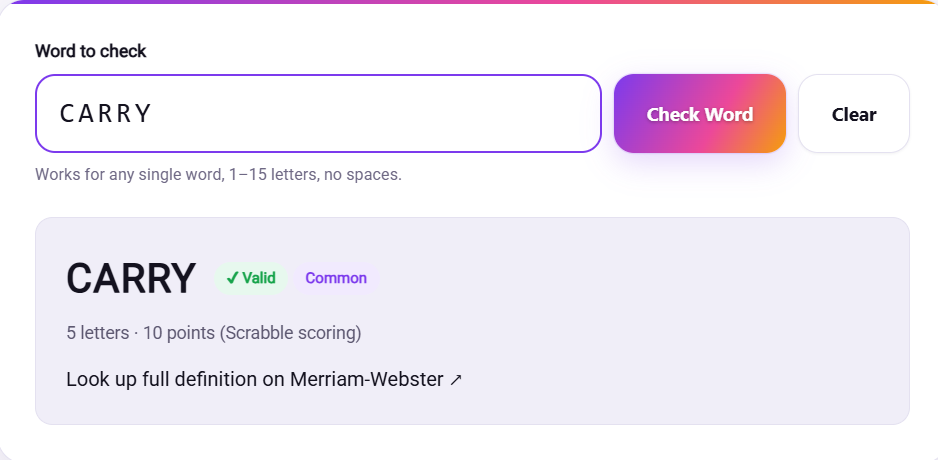
Type a word in and Check Dictionary does two things at once. First, it confirms whether the word exists in a standard English dictionary at all, a simple yes or no that settles most casual arguments immediately. Second, if it’s real, you get the actual definition, so you’re not just confirming a word exists without understanding what it means or how to use it correctly. This second part matters more than it sounds like it should, plenty of words are technically real but rarely used correctly in everyday conversation.
Real Doesn’t Always Mean Allowed
Here’s a distinction worth understanding before you rely on this for a competitive word game. Check Dictionary confirms whether a word exists in standard English. That is not the same thing as confirming whether a specific game allows it. Scrabble and Words with Friends each maintain their own official word lists, and those lists sometimes exclude words that are otherwise completely valid English, or include regional and archaic terms that a general dictionary might flag as obscure. If you’re settling a dispute mid game, a genuinely real word can still get rejected by that particular game’s rules, so treat a general dictionary check as a first pass, not the final word for tournament play.
Regional Spelling Trips People Up Constantly
“Colour” and “color.” “Realise” and “realize.” Both spellings are completely real, just on opposite sides of an ocean. Check Dictionary flags this kind of regional variation when it comes up, since assuming a British spelling is a typo, or that an American spelling is somehow less correct, is one of the more common false alarms people run into. If you’re writing for a specific audience, knowing which regional spelling to stick with consistently matters more than which one is technically more correct, since neither actually is.
When People Reach for Check Dictionary
A few situations come up again and again. Mid word game, when a play is being challenged and someone needs a fast, neutral answer. While writing, when a word feels slightly off and you want to confirm both that it exists and that you’re using it the way you think you are. And out of pure curiosity, plenty of people check a word simply because they heard it somewhere and want to know if it’s real before repeating it themselves. If you’re the one who ends up questioning a word during word game, running your remaining letters through the Word Lists Explorer can help you find a safer alternative play, or if you’re trying to fully rearrange a word you’re unsure about, the Anagram Solver can confirm what else those exact letters might spell instead.
For a deeper dive beyond a quick check, a full dictionary like Merriam-Webster offers etymology, usage examples, and related word forms that go further than a simple real or not real answer.